Resources
Everything you need to make the case for leader wellbeing
Whether you’re building your own expertise or helping others understand why leader wellbeing matters, this is where to find what you need. Explore our research, practical insights and published thinking – the evidence, language and ideas to turn leader wellbeing from a good intention into a persuasive, business-relevant conversation.
GLWS® featured resources
New here, or short on time? Start with these resources, all authored by Audrey McGibbon, these papers are essential reading on leader wellbeing and the business case for it.
The leader wellbeing blueprint
The wake-up call: why leader wellbeing may be HR’s next blind spot
Leader wellbeing & performance: the proof
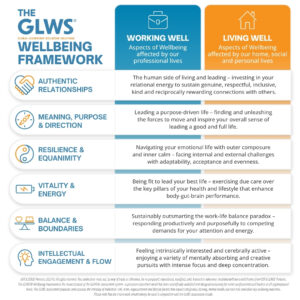
What is wellbeing? Essential concepts and insights from GLWS
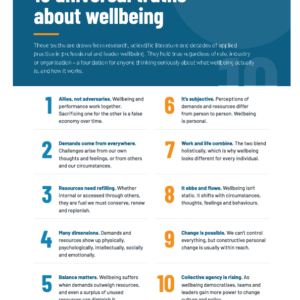
Ten Universal Truths about wellbeing
The Gender Wellbeing Gap 2025 Report
GLWS® Wellbeing Insights
Here you’ll find the most recent content shared with our community. Scroll through for practical ideas to take away and share.
To receive Wellbeing Insights, sign up to our mailing list below.
Part 4: When protecting employees puts leaders at risk and how to fix it Beyond any shadow of doubt, leaders’ wellbeing is under sustained pressure, and the very frameworks designed to protect employees may be adding to it. Across a GLWS benchmark dataset of 9,986 working professionals, leaders and people-managers
Part 3: Cultivating skills for thriving high performing leadership with GLWS Interesting quick fact – did you know 43% of senior professionals and leaders sometimes, usually, or always feel they are under-utilised and have more to offer their organisations? I’m sure our Productivity Commissioner and your CEO would have something
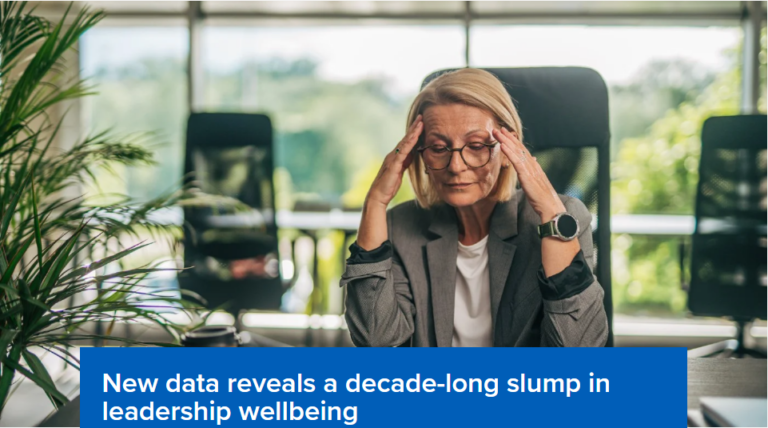
We have been measuring the wellbeing of leaders and professionals now for over a decade using the GLWS. With a dataset of more than 9600 leaders, it is one of the most comprehensive archives on executive wellbeing. For the first time, we are releasing insights from a decade of data
In Part 1 of The Crucial Role of a Leader’s Mind series, I highlighted the importance of focusing on the skills and tools that will help your leaders and senior professionals to more deeply understand and enhance their mindsets, beliefs, psychological needs, and emotions. Such shifts significantly increase the likelihood
In recent times, I’ve been inspired by hearing: Dr. Michael Gervais, author of The First Rule of Mastery: Stop Worrying about What People Think of You, make a compelling case for investing in ‘above the line’ mental skills training. Stephen King, Commissioner for the Australian Federal Government’s Productivity Commission share
This special report investigates a central question: Is the wellbeing of those in senior roles disproportionately worse for women than for men? In the early years of GLWS, based on a sample of approximately 1000 leaders, we established evidence for a small ‘Gender Wellbeing Gap’. In the post-pandemic context, driven
Over the past decade, understanding of wellbeing in the workplace has evolved significantly. We’ve observed four key trends: A growing awareness about holistic wellbeing and the opportunity it offers individuals as a lever to prevent burnout, sustain energy and perform at our best. Increasing leadership recognition of the link between
In the last episode of “Judgmental: When a Psychologist and a Lawyer Walk into a Bar,” Audrey, Kate Connors and Greg Smith rewarded listeners with a sophisticated exploration of the key concepts at play in the area of leadership wellbeing and its connection to psychosocial hazards for both individuals and
GLWS® in the media
Where our thinking reaches beyond our own channels. From industry publications to mainstream press, Audrey McGibbon is regularly invited to share expert analysis on leader wellbeing, performance and the changing demands of leadership.
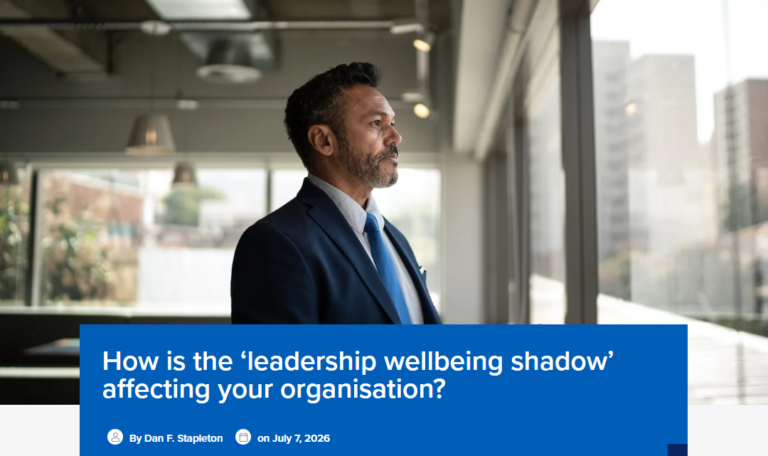
AHRI features Audrey McGibbon’s own signature concept — the leadership wellbeing shadow. Her thesis: a leader’s personal wellbeing isn’t a soft, personal matter but a high-leverage variable that cascades through the whole organisation. When leaders are well, they cast a positive shadow — lifting morale, teamwork, psychological safety and business
AHRI recently reported on our latest benchmark data from 9600+ leaders, which reveals a decade of unbroken decline among professionals, with ‘life satisfaction’ falling faster since 2023 than any other dimension. Key takeaways: Every primary indicator of subjective wellbeing – from happiness and life satisfaction to the core metrics of
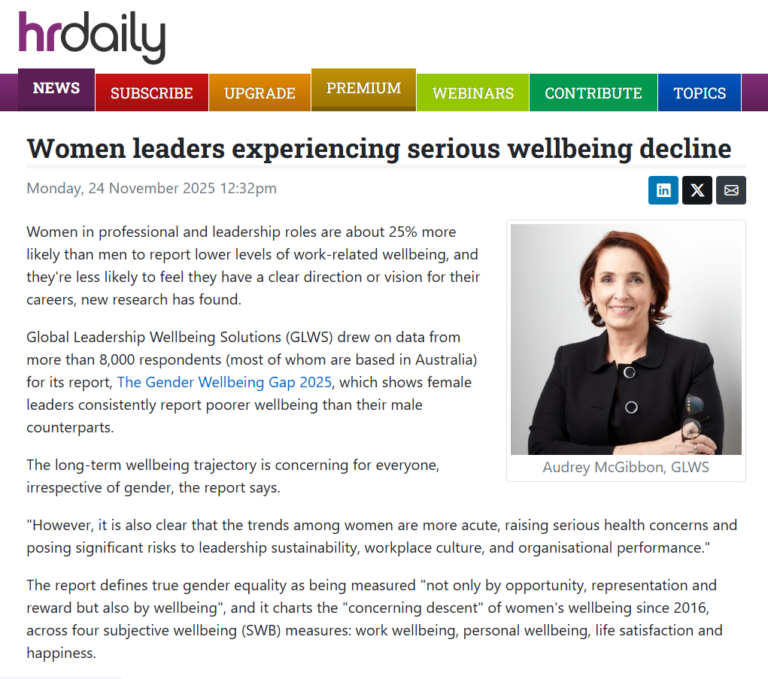
HR Daily reports on GLWS’s own research, The Gender Wellbeing Gap 2025, drawing on data from more than 8,000 respondents. The findings are stark: women in professional and leadership roles are around 25% more likely than men to report lower work-related wellbeing, and their wellbeing has been on a “concerning
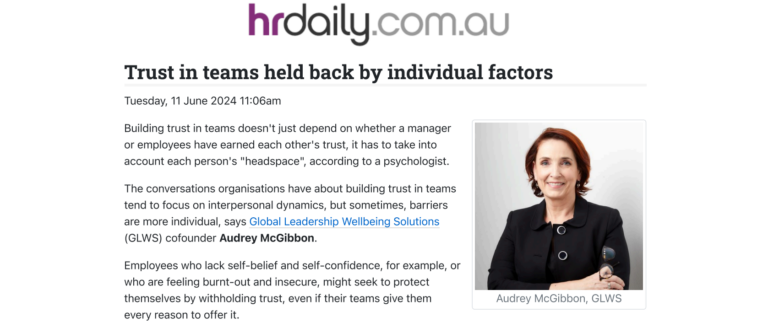
In this HR Daily feature, Audrey McGibbon reframes a conversation most organisations get half-right. Trust in teams, she argues, isn’t only about interpersonal dynamics between managers and employees — it also depends on each person’s “headspace.” Someone who is overworked, burnt out, or feeling insecure may withhold trust no matter

In this HRM cover story, Audrey McGibbon is a lead expert voice on one of the workplace’s most under-recognised risks: work addiction. Drawing on her doctoral research, Audrey explains why between 12 and 15% of the working population — and around 25% in high-pressure fields like law, finance and health
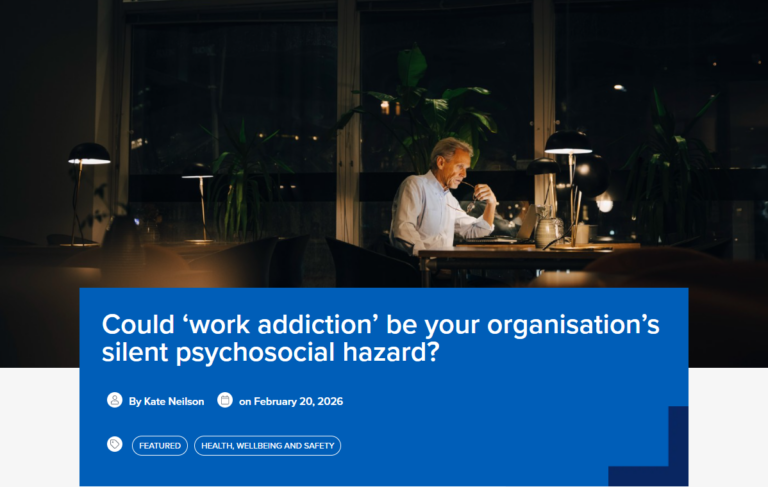
Published by the Australian HR Institute, this feature draws on Audrey McGibbon’s expertise to reframe work addiction as a genuine — and often invisible — psychosocial hazard. Between 12 and 15% of the workforce, Audrey explains, struggles with an uncontrollable compulsion to overwork, rising to around 25% in high-pressure fields
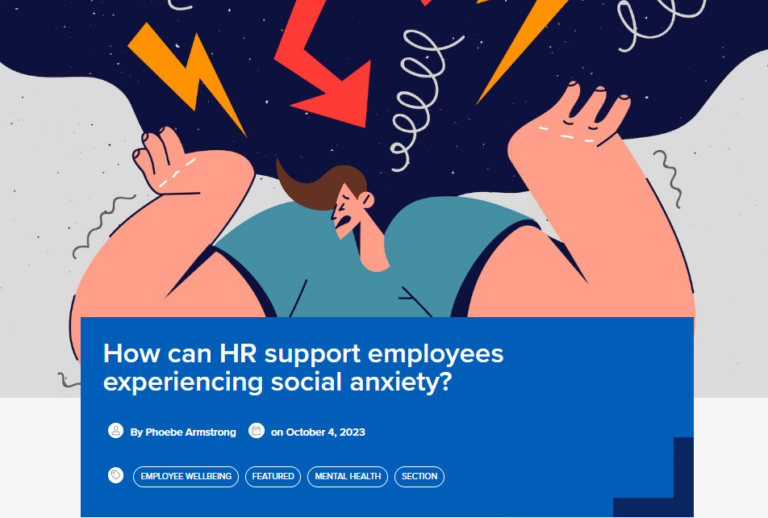
In this AHRI feature, Audrey McGibbon brings a psychologist’s eye to a widely under-recognised workplace issue: social anxiety. With anxiety now the most common mental illness affecting Australians, there’s a good chance a portion of any workforce is quietly navigating it — often invisibly. Audrey explains why it’s so easily
In this HR Daily feature, Audrey McGibbon turns a familiar management challenge on its head. Organisations invest heavily in training leaders to manage underperformance and hold difficult conversations — but the toll that repeatedly managing a chronic underperformer takes on the leader themselves is, as Audrey notes, barely investigated at
Subscribe below to receive GLWS® Wellbeing Insights
Sign up to join our community below. You’ll also receive our full suite of sample reports, so you can see exactly how the GLWS surfaces what’s driving a leader’s wellbeing and what to do about it.