
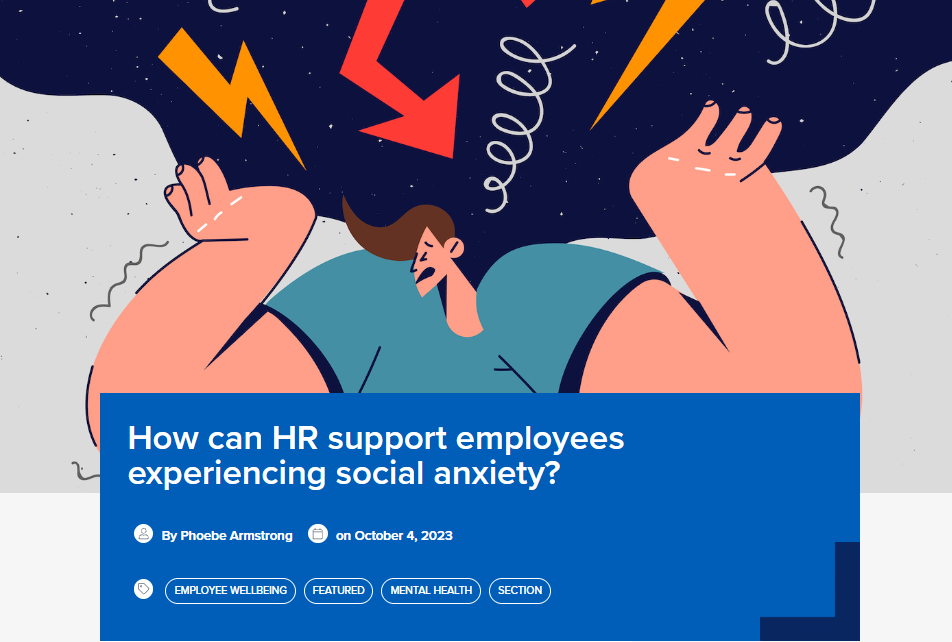
In this AHRI feature, Audrey McGibbon brings a psychologist’s eye to a widely under-recognised workplace issue: social anxiety.
With anxiety now the most common mental illness affecting Australians, there’s a good chance a portion of any workforce is quietly navigating it — often invisibly. Audrey explains why it’s so easily missed (many outwardly confident professionals run on a “learned extraversion” that masks acute social anxiety underneath), why it’s no reflection of performance (anxiety-prone people are frequently high-performing perfectionists), and how leaders can support people without either spotlighting or excluding them.
Her message connects straight to psychological safety: at its heart, social anxiety is the fear of being judged — the very thing a psychologically safe culture is designed to ease.
Key takeaways:
- Anxiety is the most common mental illness among Australians (around 1 in 6), disproportionately affecting women and younger people — so it’s likely present in most workforces.
- Social anxiety is easily missed: many confident-seeming professionals operate on a “learned extraversion” that hides real social anxiety beneath the surface.
- It’s not a marker of poor performance — anxiety-prone people are often highly productive perfectionists and strong performers.
- It can be especially hard to spot in men, who tend to externalise symptoms as other behaviours (e.g. aggression) rather than talk about them.
- A subtle warning sign is conspicuous absence from socially taxing moments — calling in sick before a presentation, or staying remote to avoid interaction.
- Support is a balance: avoid putting anxious people on the spot (“come on, what do you think?”), but don’t exclude them either — a nod or eye contact can include without spotlighting.
- The deeper fix is cultural: social anxiety is closely tied to psychological safety, so building a genuinely safe, judgement-light culture is the most effective preventive step.