
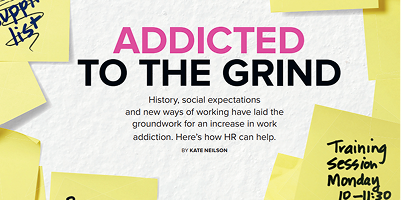
In this HRM cover story, Audrey McGibbon is a lead expert voice on one of the workplace’s most under-recognised risks: work addiction. Drawing on her doctoral research, Audrey explains why between 12 and 15% of the working population — and around 25% in high-pressure fields like law, finance and health — struggle with a compulsion to overwork, and why HR can’t afford to look away.
Her central warning cuts to the heart of the GLWS philosophy: “We’re constantly talking about burnout, but burnout is the outcome of unmanaged chronic work-related stress… If we’re measuring burnout, it’s already too late.”
The piece makes the case for measuring and addressing the drivers of overwork before they become burnout — and, with Safe Work Australia’s psychosocial hazard code now in force, positions it as a duty of care, not just good practice.
Key takeaways:
- Work addiction affects an estimated 12–15% of the workforce, rising to around 25% in high-pressure sectors like law, finance, health services and among entrepreneurs.
- Burnout is a lagging indicator — by the time you’re measuring it, the damage is done. The opportunity is to identify the chronic stress and overwork that precede it.
- Certain traits raise the risk: perfectionism, difficulty delegating, extroversion, and a high need to please — meaning even engaged, high-performing “model” employees can be most at risk.
- Culture and leadership matter as much as individuals. Counter-intuitively, a supportive, high-autonomy manager can heighten risk for driven people, not lower it.
- Australia’s psychosocial hazard regulations have shifted overwork from a personal issue to an employer responsibility, expanding duty of care from physical to psychological harm.
Audrey offers a practical lens: treat work addiction like any other addiction, watching for six recognisable factors (salience, tolerance, mood change, relapse, withdrawal, and conflict with other parts of life).